Quick AnswerUpdated July 2026
“Multilingual voiceover services” primarily provide dubbed audio, replacing original spoken language with translated voice recordings by professional artists. This creates a more natural and immersive viewing experience, enhancing audience engagement, learning, and emotional connection in their native language, particularly for eLearning, corporate training, and marketing, despite being more expensive than subtitling.
As businesses expand globally, video content has become one of the most effective ways to connect with international audiences. Companies now use videos for marketing, eLearning, training, customer support, and social media engagement. However, reaching multilingual audiences requires proper localization strategies.
Two of the most common methods used in video localization servicesare dubbing and subtitling. Although both help audiences understand content in different languages, they work very differently and provide unique benefits depending on the project goals.
Understanding the difference between dubbing and subtitling helps businesses choose the right localization strategy for better global communication.
What Is Dubbing?
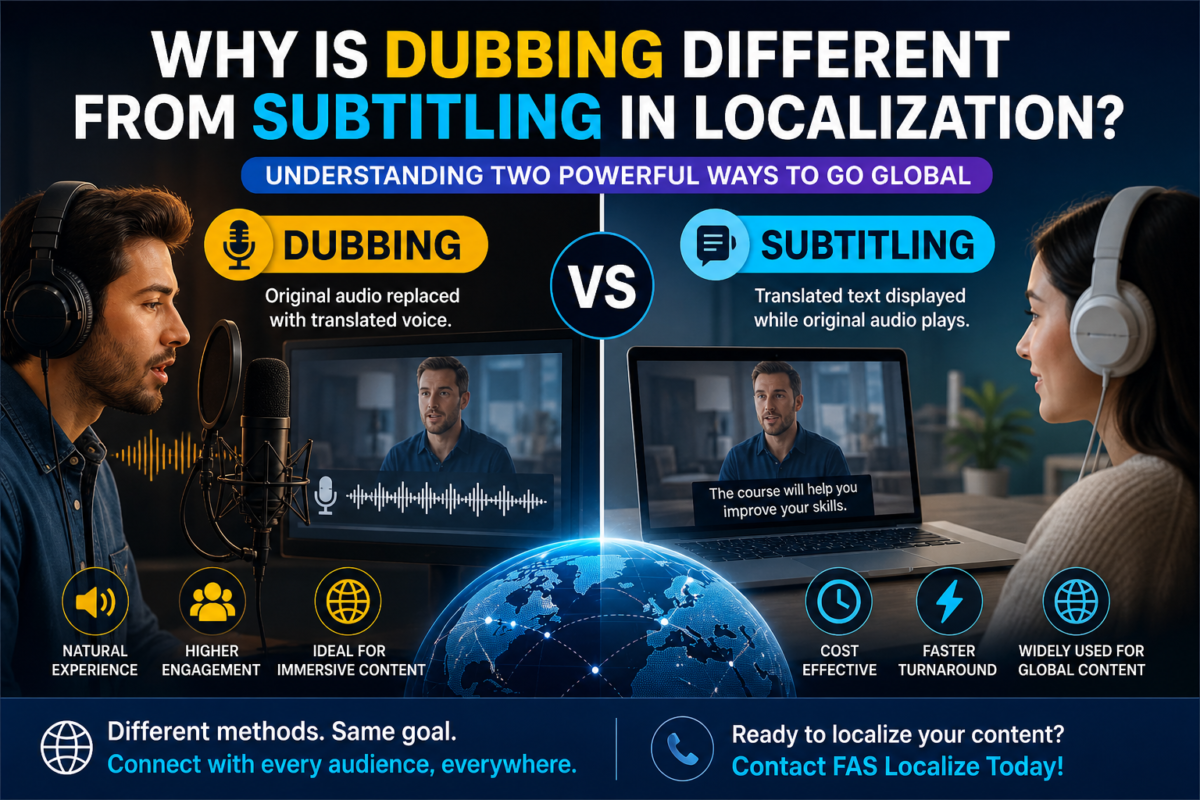
Dubbing replaces the original spoken audio with translated voice recordings in another language. Professional voice artists record translated scripts while matching the timing and tone of the original speaker.
Professional multilingual voiceover services are commonly used for:
- eLearning courses
- Corporate training videos
- Marketing campaigns
- Product demonstrations
- Entertainment content
Dubbing creates a more natural viewing experience because audiences can listen in their native language without reading subtitles.
This method improves:
- Audience engagement
- Learning experience
- Emotional connection
- Accessibility for global viewers
Because dubbing requires voice recording and audio production, it is usually more expensive than subtitling.
What Is Subtitling?
Subtitling displays translated text on the screen while keeping the original audio unchanged. Viewers read the translated subtitles while listening to the original speaker.
Professional subtitling services are widely used for:
- Webinars
- Online interviews
- Social media videos
- Educational content
- International presentations
Subtitling is faster and more affordable than dubbing because it does not require voice recording.
Businesses often choose subtitling when they need to localize large amounts of video content quickly and cost-effectively.

Main Difference Between Dubbing and Subtitling
The biggest difference is how the translation is delivered to the audience.
Dubbing:
- Replaces original audio
- Uses translated voice recordings
- Creates immersive viewing experiences
Subtitling:
- Faster and lower-cost localization solution
- Keeps original audio intact
- Displays translated text on the screen
Both methods are valuable for multilingual content localization, but the right choice depends on audience preferences and project requirements.
Why Localization Matters for Video Content
Professional voiceover localizationand subtitling help businesses communicate effectively with international audiences.
Localized video content helps businesses:
- Increase global reach
- Improve audience understanding
- Build customer trust
- Enhance user engagement
High-quality localization also improves the overall experience for multilingual users by making content more culturally relevant and accessible.
Businesses using professional global localization services can connect more effectively with audiences across different regions and languages.
Final Thoughts
Both dubbing and subtitling play important roles in multimedia localization. Dubbing creates a more immersive experience through translated voice recordings, while subtitling offers a faster and more budget-friendly solution.
Choosing the right localization method depends on your audience, budget, and content goals. Businesses investing in professional multilingual voiceover services and subtitling solutions can improve global communication and reach international audiences more effectively.
Ready to localize your video content globally? Contact FAS Localize today and discover how our professional localization solutions can help your business grow internationally.
Related Articles
Ready to get started?
Tell us about your localization project and get a fast, accurate quote from FAS Localize, usually within one business day.
Get a Free Quote →