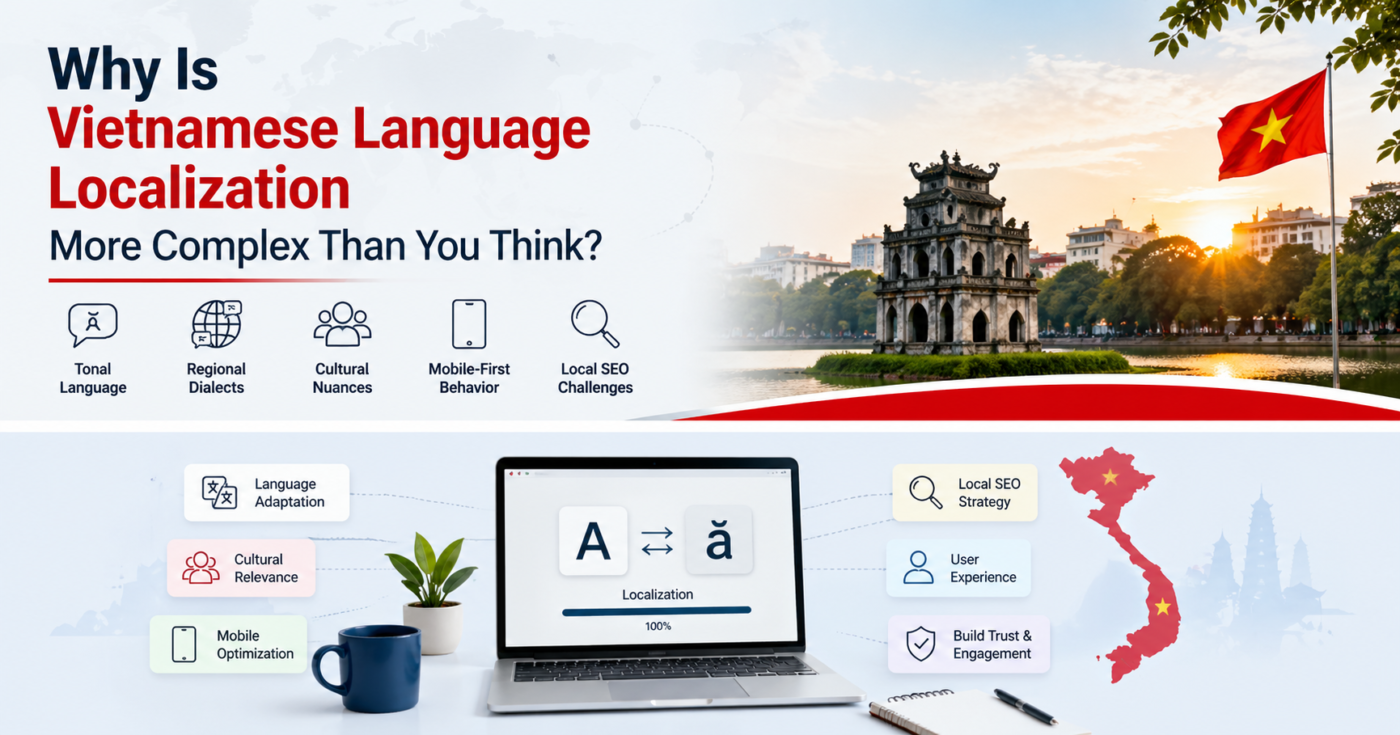
In today’s global digital economy, businesses are expanding into international markets faster than ever before. Vietnam has emerged as one of Southeast Asia’s fastest-growing digital economies, making it an attractive destination for global brands, e-learning companies, software providers, and eCommerce businesses. However, many companies entering this market quickly realize that Vietnamese language localization is far more complex than simple translation.
At first glance, localization may appear to be just converting English content into Vietnamese. In reality, successful localization requires cultural adaptation, regional language understanding, technical optimization, and user-focused communication strategies. Businesses that underestimate these challenges often struggle to connect with Vietnamese audiences effectively.
In this comprehensive guide, we will explore why Vietnamese language localization is more complicated than most businesses expect and how professional localization can help brands build trust, improve engagement, and increase conversions in Vietnam.
What Is Vietnamese Language Localization?
Vietnamese is one of the most linguistically and culturally nuanced languages in Southeast Asia. Several factors make localization more challenging than businesses initially expect.
Tonal Language Structure
Vietnamese is a tonal language with six distinct tones. A single word can have completely different meanings depending on pronunciation and accent marks. Even minor translation or transcription errors can dramatically change the intended meaning of a sentence.
This complexity makes automated translation unreliable for many business applications, especially in marketing, healthcare, education, and customer communication.
Regional Dialects and Accent Differences
Vietnam has three major regional dialects:
- Northern Vietnamese
- Central Vietnamese
- Southern Vietnamese
Each region has differences in vocabulary, pronunciation, and communication style. Businesses targeting audiences in Ho Chi Minh City may require different language adaptation compared to audiences in Hanoi.
To better understand the country’s cultural and regional diversity, exploring Vietnam provides useful background information about the market and its population.
Professional localization teams carefully adapt content based on the target audience and region to ensure clarity and relatability.
Cultural Context Matters
Localization is not only about language accuracy. Vietnamese consumers value respect, community, and relationship-focused communication. Marketing messages that work effectively in Western markets may feel too aggressive or unnatural in Vietnam.
Colors, symbols, humor, and imagery can also carry different meanings depending on cultural context. Without proper localization, businesses risk creating content that feels disconnected or culturally inappropriate.
This is why professional localization includes cultural review and adaptation rather than direct translation alone.
Vietnamese Localization for Websites and Apps
Website localization is one of the most important steps for businesses entering the Vietnamese market. A localized website improves user experience, trust, and conversion rates by making navigation and communication easier for local audiences.
Vietnam is a mobile-first market, meaning most users browse websites and interact with brands through smartphones. Localized websites must:
- Load quickly on mobile devices
- Use culturally relevant visuals
- Display local currency and payment methods
- Offer user-friendly navigation
- Include region-specific SEO optimization
Businesses that fail to optimize for mobile users often experience high bounce rates and lower engagement.

The Importance of Local SEO in Vietnam
Localization also plays a major role in search engine optimization. Vietnamese users search online using local keywords, phrases, and language patterns that differ from English search behavior.
Improving user experience through localized content helps search engines recognize your website as relevant for local audiences. This can improve visibility in search results and attract more targeted traffic.
Professional Vietnamese localization strategies often include:
- Local keyword research
- Vietnamese metadata optimization
- Mobile SEO improvements
- Region-specific content creation
- Internal linking for local relevance
These strategies help businesses compete more effectively in Vietnam’s growing digital market.
Industries That Benefit Most From Vietnamese Localization
Vietnamese localization is especially important for industries that rely heavily on communication and user engagement.
E-Learning and Corporate Training
Localized educational content improves learning outcomes by making lessons easier to understand and culturally relevant for Vietnamese learners.
eCommerce and Retail
Localized product descriptions, checkout systems, and marketing campaigns help businesses build trust and increase sales.
Software and Technology
Apps, SaaS platforms, and software tutorials require localization to improve usability and customer satisfaction.
Healthcare and Pharmaceuticals
Medical instructions and healthcare communication must be accurately localized to ensure clarity and regulatory compliance.
Marketing and Advertising
Localized campaigns create stronger emotional connections and improve engagement with Vietnamese audiences.
Why Businesses Choose Professional Localization Services
Professional localization services provide far more than translation. They help businesses create seamless digital experiences that align with the expectations of Vietnamese users.
At FAS Localize, our localization specialists combine linguistic expertise, cultural adaptation, and SEO optimization to help brands connect more effectively with Vietnamese audiences. Our localization workflow ensures high-quality, culturally accurate, and user-focused content for websites, applications, marketing campaigns, and digital media.
Final Thoughts
Vietnamese language localization is significantly more complex than many businesses realize. From tonal pronunciation and regional dialects to cultural adaptation and local SEO, effective localization requires a strategic and professional approach.
Businesses that invest in high-quality localization gain a major competitive advantage in Vietnam’s rapidly expanding digital economy. By creating content that feels natural, culturally appropriate, and user-friendly, brands can improve engagement, build trust, and achieve long-term growth in one of Southeast Asia’s most promising markets.
Ready to localize your business for Vietnam? Contact FAS Localize today and let our localization experts help your brand connect with Vietnamese audiences more effectively.
Related Articles
Ready to get started?
Tell us about your localization project and get a fast, accurate quote from FAS Localize, usually within one business day.
Get a Free Quote →