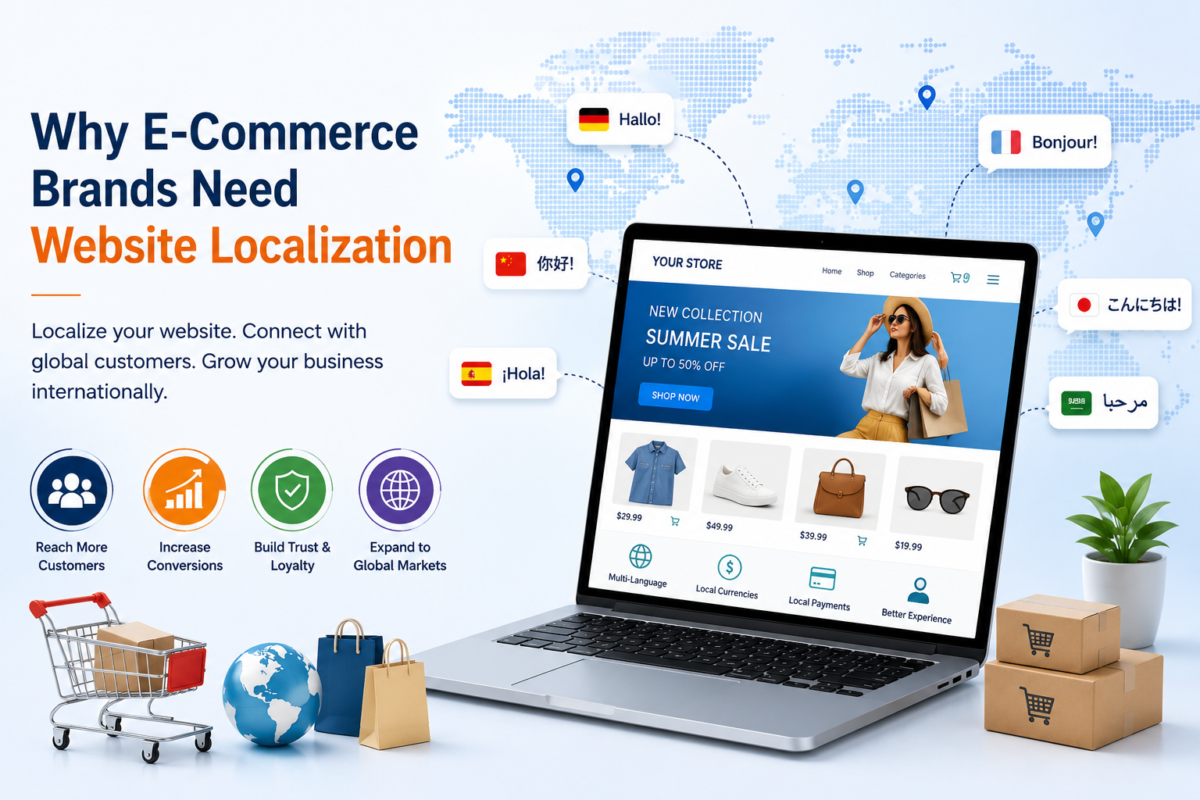
The global e-commerce industry is growing rapidly, allowing businesses to sell products and services to customers worldwide. However, simply translating website content is no longer enough to succeed in international markets. Customers expect personalized experiences that match their language, culture, and preferences. This is where website localization becomes essential.
For modern e-commerce brands, website localization helps create a seamless shopping experience for international customers. By adapting content, images, currencies, payment methods, and cultural references, businesses can build trust and increase conversions across different markets.
What Is Website Localization?
Website localization is the process of adapting a website to meet the language, cultural, and regional requirements of a specific target audience. Unlike simple translation, localization ensures that every aspect of the website feels natural to local users.
Website localization may include:
- Translating website content
- Adapting currencies and pricing
- Localizing images and graphics
- Modifying date and time formats
- Adapting product descriptions
- Supporting local payment methods
- Optimizing for regional search engines
According to Language Localisation, localization involves adapting products and content to suit specific markets and cultures.
Why Website Localization Matters for E-Commerce Brands
1. Reach More International Customers
Consumers are more likely to purchase from websites available in their native language. A localized website removes language barriers and makes it easier for customers to understand products and services.
By investing in website localization services, businesses can expand into new markets and attract a wider customer base.
2. Improve Customer Experience
User experience plays a major role in online purchasing decisions. Customers feel more comfortable browsing websites that use familiar language, currencies, and cultural references.
Localized websites help:
- Improve navigation
- Increase customer satisfaction
- Reduce confusion
- Enhance shopping experiences
3. Increase Conversion Rates
When customers understand product information clearly, they are more likely to complete purchases. Localization reduces uncertainty and builds confidence during the buying process.
Benefits include:
- Higher conversion rates
- Increased sales
- Lower cart abandonment
- Better customer retention
4. Build Customer Trust
Trust is one of the most important factors in e-commerce success. A localized website shows that a business values its customers and understands their needs.
Professional localization services help brands:
- Strengthen credibility
- Improve customer loyalty
- Create authentic experiences
- Build long-term relationships
5. Gain a Competitive Advantage
Many businesses still rely solely on English-language websites. Brands that invest in website localization can stand out from competitors and better serve local markets.
Localized websites allow businesses to:
- Enter new regions faster
- Connect with local audiences
- Improve brand recognition
- Increase market share
Website Localization and Multilingual SEO
Website localization and SEO work together to improve international visibility. Search engines prioritize content that is relevant to users in specific locations and languages.
Localized websites can help:
- Improve international search rankings
- Increase organic traffic
- Target local keywords
- Reach global customers effectively
Businesses using multilingual SEO strategies often experience better visibility in international search results.
Common Website Localization Mistakes
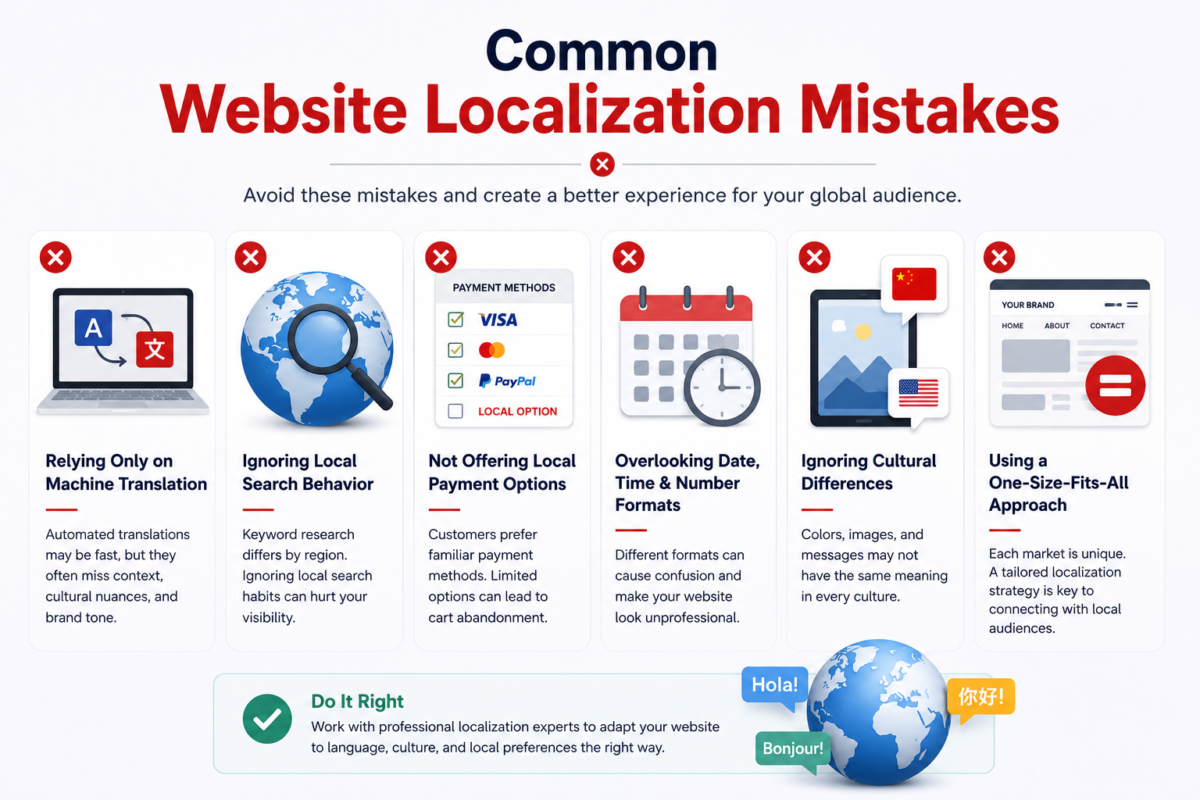
Many e-commerce businesses make mistakes when expanding globally.
Using Machine Translation Only
Automated translations may miss cultural nuances and create confusing content.
Ignoring Local Search Behavior
Different countries use different keywords when searching online.
Failing to Localize Payment Options
Customers prefer familiar payment methods available in their region.
Overlooking Cultural Differences
Images, colors, and messaging should align with local cultural expectations.
Industries That Benefit from Website Localization
Fashion and Apparel
Localized product descriptions improve customer engagement.
Electronics
Clear technical information helps customers make informed decisions.
Health and Wellness
Localized content improves trust and compliance.
Beauty and Cosmetics
Brands can connect more effectively with diverse audiences.
Technology and SaaS
Software companies use localization to support international users.
How to Choose the Right Website Localization Partner
When selecting a localization provider, businesses should consider:
- Native language experts
- Industry experience
- Multilingual SEO knowledge
- Quality assurance processes
- Fast turnaround times
- Global market expertise
Professional providers like FASLocalize help businesses create localized digital experiences that drive international growth.
The Future of Website Localization
As global e-commerce continues to expand, website localization will become even more important. Consumers increasingly expect personalized experiences in their native language.
Businesses investing in localization today will benefit from:
- Higher international sales
- Better customer engagement
- Improved search visibility
- Stronger brand loyalty
- Sustainable global growth
Conclusion
Website localization is no longer optional for e-commerce brands looking to compete internationally. It helps businesses reach global audiences, improve customer experiences, increase conversions, and strengthen brand trust.
By combining website localization, multilingual SEO, and culturally relevant content, businesses can create meaningful connections with customers worldwide and achieve long-term success in international markets.
Related Articles
Ready to get started?
Tell us about your localization project and get a fast, accurate quote from FAS Localize, usually within one business day.
Get a Free Quote →