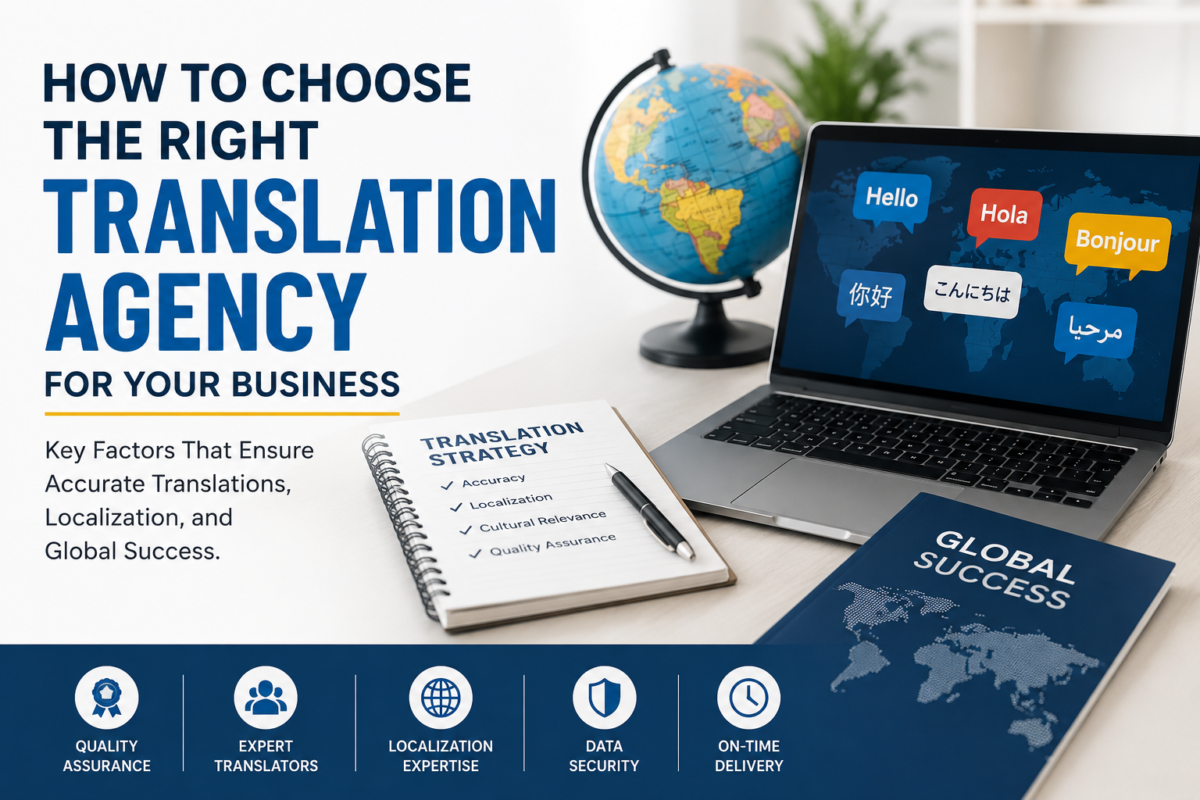
Expanding into international markets requires more than simply translating content from one language to another. Businesses must communicate accurately, maintain brand consistency, and connect with audiences across different cultures. Choosing the right translation agency can make a significant difference in achieving these goals.
With countless providers offering translation and localization services, finding the right partner can feel overwhelming. However, selecting an experienced agency ensures that your content remains accurate, culturally relevant, and effective for global audiences.
Why Choosing the Right Translation Agency Matters
Translation errors can negatively impact customer trust, brand reputation, and business growth. Poorly translated content often creates confusion and may prevent customers from engaging with your products or services.
A professional translation agency helps businesses communicate clearly while maintaining the intended message across different languages. This becomes especially important for websites, marketing campaigns, legal documents, technical manuals, and customer support materials.
Working with the right agency can improve communication, strengthen customer relationships, and support international expansion efforts.
Understand Your Business Requirements
Before selecting a translation provider, businesses should identify their specific goals and requirements. Different projects require different levels of expertise.
For example, website localization requires a different approach than translating legal contracts or technical documents. Understanding your needs allows you to choose a provider with relevant industry experience and language expertise.
Businesses planning to enter new international markets should also consider whether they need ongoing localization support, multilingual content creation, or SEO-focused translation services.

Look for Industry Experience
Not all translation projects are the same. Industries such as healthcare, legal services, technology, e-commerce, and finance often require specialized terminology and subject matter expertise.
An experienced agency understands industry-specific language and can ensure consistency across all translated content. This reduces the risk of errors and helps maintain professional communication.
Businesses should evaluate previous projects, client testimonials, and industry experience before making a decision.
Evaluate Translation Quality Standards
Quality should always be a top priority when selecting a translation partner. A reliable agency follows structured quality assurance processes to ensure accuracy and consistency.
Professional translators review content carefully, while editors and proofreaders verify grammar, terminology, and overall quality. This multi-step approach helps eliminate mistakes and improve the final result.
High-quality translations create better customer experiences and strengthen brand credibility in international markets.
Consider Localization Capabilities
Translation alone may not be enough for businesses targeting global audiences. Customers respond better to content that reflects their language, culture, and local preferences.
This is where localization services become essential. According to Language Localisation, localization involves adapting content for a specific language, region, and cultural context.
A translation agency with strong localization expertise can help businesses create content that feels natural and relevant to local audiences.
Check Website and Digital Marketing Expertise
Many businesses require translated websites, multilingual landing pages, and localized marketing content. Choosing an agency with digital marketing experience can improve the effectiveness of international campaigns.
Professional website translation services help businesses maintain SEO performance while adapting content for different markets. This ensures that websites remain visible to international customers and continue attracting organic traffic.
Localization combined with multilingual SEO can significantly improve online visibility in target regions.
Assess Language Coverage
Businesses often expand into multiple markets simultaneously. Choosing a translation agency that supports multiple languages provides greater flexibility and scalability.
A provider with a broad network of native-speaking linguists can help maintain consistency across various markets while simplifying project management.
This approach allows businesses to manage multilingual content more efficiently as they grow internationally.
Review Communication and Support
Strong communication is essential when working with a translation provider. Businesses should look for agencies that offer clear project timelines, responsive support, and transparent workflows.
Effective communication helps prevent misunderstandings and ensures that translation projects stay on schedule. A dedicated project management team can also streamline collaboration and improve overall efficiency.
Compare Value Instead of Price Alone
While pricing is an important consideration, businesses should avoid choosing a provider based solely on cost. Low-cost translations often compromise quality, which can result in additional expenses later.
The best translation agencies focus on delivering value through accurate translations, localization expertise, quality assurance, and professional support.
Investing in quality language services often produces better long-term results and stronger customer engagement.
Why Businesses Choose Professional Translation Agencies
Companies looking to expand globally often rely on professional language service providers to support their growth. Services such as translation, localization, multilingual SEO, voice-over localization, and AI data collection help businesses communicate effectively with international audiences.
Professional providers like FAS Localize help organizations deliver accurate, culturally relevant content while supporting international business objectives.
By working with experienced language experts, businesses can reduce communication barriers and improve customer experiences across multiple markets.
Conclusion
Choosing the right translation agency is an important decision for any business planning international growth. The right partner can help improve communication, strengthen brand credibility, and create meaningful connections with customers worldwide.
By evaluating industry expertise, quality standards, localization capabilities, and language support, businesses can find a translation agency that aligns with their goals and delivers long-term value. Investing in professional translation and localization services is a strategic step toward successful global expansion.
Related Articles
Ready to get started?
Tell us about your translation theory project and get a fast, accurate quote from FAS Localize, usually within one business day.
Get a Free Quote →