Introduction
Expanding your business into international markets offers incredible growth opportunities, and Vietnam stands out as one of the fastest-growing digital economies in Southeast Asia. With a rapidly increasing number of internet users and a strong eCommerce culture, Vietnam presents a highly attractive landscape for global brands. However, success in this market requires more than simply translating your website content. To truly connect with your audience, you need to localize your brand for the Vietnamese market by adapting your messaging, visuals, and overall user experience. A well-localized brand creates familiarity and trust, which ultimately leads to higher engagement and improved conversion rates.
Understanding the Vietnamese Market
Before entering any international market, it is essential to understand the local audience, and Vietnam is no exception. The country has a young, tech-savvy population that heavily relies on mobile devices for browsing and shopping. Cultural values such as community, trust, and relationships play a significant role in consumer behavior. Businesses that take the time to understand these cultural nuances are more likely to build lasting connections with their audience. To gain a broader perspective, exploring the Vietnam market can provide useful insights into its economic growth and digital expansion.
What Does Brand Localization Involve?
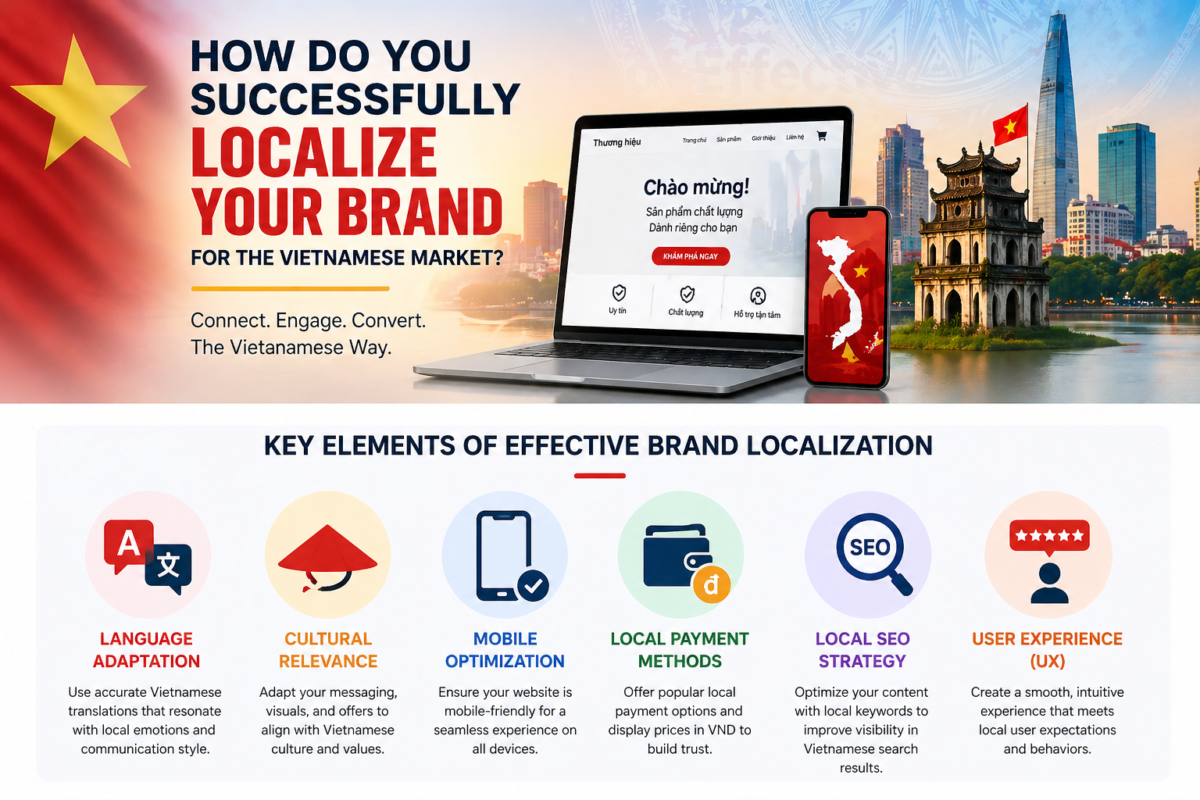
Brand localization goes beyond simple translation. It involves adapting every aspect of your brand to align with the expectations and preferences of a specific audience. This includes language, tone of communication, design elements, payment methods, and even marketing strategies. A properly executed localization strategy ensures that your brand feels natural and relevant to Vietnamese users. Implementing a localized website allows businesses to deliver culturally appropriate content that resonates with local audiences and improves overall user experience.
Building Trust Through Language and Communication
Language plays a critical role in how your brand is perceived. Vietnamese consumers prefer content in their native language, and using accurate, culturally appropriate translations can significantly impact trust. Instead of relying solely on automated tools, businesses should invest in professional translation services to ensure clarity and accuracy. The tone of your messaging should also reflect local communication styles, which tend to be polite and relationship-focused. When users feel understood, they are more likely to engage with your brand and take action.
Optimizing for Mobile-First Users
Vietnam is a mobile-first market, with a large percentage of users accessing websites through smartphones. This makes mobile optimization a crucial part of your localization strategy. Your website should be responsive, fast-loading, and easy to navigate on smaller screens. A seamless mobile experience not only improves user satisfaction but also increases the likelihood of conversions. When users can quickly find what they are looking for without any friction, they are more likely to complete desired actions such as making a purchase or filling out a form.
Adapting Visual and Cultural Elements
Visual content is just as important as text when it comes to localization. Colors, images, and design styles can carry different meanings in different cultures. In Vietnam, certain colors and symbols may have cultural significance, so it is important to choose visuals that align with local preferences. Additionally, using culturally relevant imagery helps create a sense of familiarity and connection. When users see content that reflects their culture, they are more likely to trust your brand and engage with your offerings.

Localizing Payment Methods and User Experience
Another important aspect of localization is adapting your website’s functionality to match local expectations. This includes offering preferred payment methods, displaying prices in local currency, and ensuring that checkout processes are simple and user-friendly. Vietnamese consumers often prefer convenient and secure payment options, so providing these can significantly enhance user trust. A smooth and localized user experience reduces friction and encourages users to complete transactions.
Leveraging Local SEO for Better Visibility
To successfully reach your target audience in Vietnam, your website must be optimized for local search engines and user behavior. This involves using region-specific keywords, creating localized content, and optimizing metadata. Local SEO helps your website appear in relevant search results, making it easier for potential customers to find your business. When combined with a strong localization strategy, this approach can drive highly targeted traffic and improve conversion rates.
Enhancing Engagement and Long-Term Growth
Localization is not a one-time process but an ongoing strategy that evolves with market trends and user preferences. Continuously updating your content, analyzing user behavior, and refining your approach can help you maintain relevance in the Vietnamese market. By delivering personalized and culturally appropriate experiences, businesses can build long-term relationships with their audience. This not only increases customer loyalty but also drives sustainable growth and higher returns on investment.
Conclusion
Successfully localizing your brand for the Vietnamese market requires a deep understanding of local culture, language, and user behavior. By focusing on personalization, mobile optimization, cultural relevance, and local SEO, businesses can create meaningful connections with their audience. A strong localization strategy not only improves user experience but also builds trust and significantly increases conversion rates. As Vietnam continues to grow as a digital powerhouse, investing in localization can give your brand a competitive edge in this dynamic market.e