
Checklist
Why Machine Translation Gets Terminology Wrong
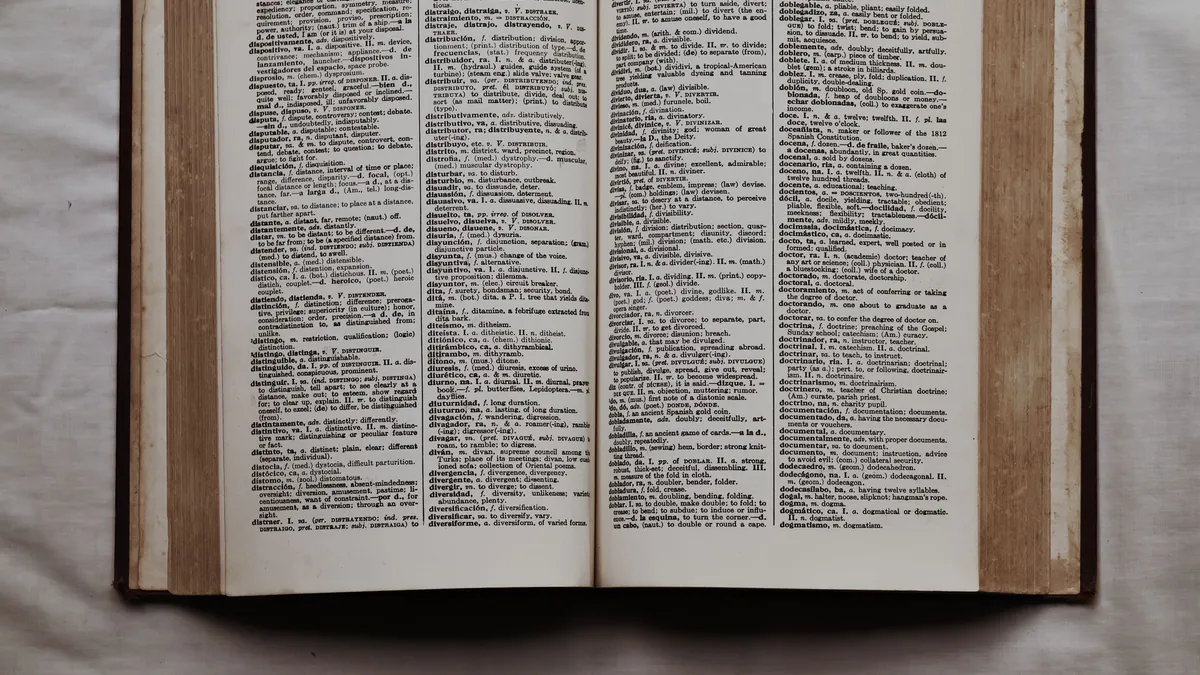
Why machine translation gets terminology wrong isn't usually a model flaw - it's a sourcing flaw. WMT26's terminology task found that the best systems nearly matched reference translations once handed a correct term dictionary; the failure happens upstream, during term discovery, before translation even starts.
That upstream fix is also where a human review layer earns its keep. Every MTPE delivery from FAS Localize (faslocalize.com) pairs an AI draft with a native-linguist post-editor and ships scored against the MQM error framework. See the MTPE service for pricing and a free test translation.
Why does machine translation actually get terminology wrong?
The WMT26 terminology translation task tested three language pairs: Spanish to Basque, English to Polish, and Traditional Chinese to English, using explicit, document-level term dictionaries for one track and sample bitexts for the other. The findings were published this year in the Proceedings of the Eleventh Conference on Machine Translation, held in Budapest, Hungary.
Seventeen teams entered the task, submitting 21 systems to the track that supplied an explicit dictionary and 18 systems to the track that required finding the right term from sample text on their own, according to the same WMT26 findings.
On the dictionary track, the researchers found the task is "close to saturation": the best systems nearly reach the reference translations once they are handed the correct term. On the extraction track, scores dropped and spread out, which the authors read as evidence that the real bottleneck is finding the right term, not using it once it is found.
That reframes the problem. Stop blaming the MT engine for a wrong technical term, a mistranslated product name or an inconsistent brand word. Start auditing how terms get into your glossary in the first place.
- teams entered WMT26's terminology task
- 17
- systems submitted to the dictionary track / the extraction track
- 21 / 18
- language pairs tested: Es-Eu, En-Pl, Zh-En
- 3
How do you fix terminology before translation, not after?
Term sourcing checklist
- Extract candidate terms from your source content with a term extractor, then export the list for review.
- Have a subject-matter reviewer approve each candidate: keep domain-specific nouns and product names, reject generic marketing language.
- Assign one approved target equivalent per source term, and record any forbidden variant so it never slips back in.
- Tag each term's part of speech, case sensitivity and context (UI string, legal clause, marketing line).
- Import the clean list into your TMS glossary or termbase tool with that metadata intact.
- Before translation starts, flag any source segment that contains a glossary term with no target entry yet.
- Review the termbase on a set schedule; retire terms you no longer use and add new product vocabulary as it ships.
Which tools handle each stage?
Term extraction
A term extractor turns a translation memory or a raw source corpus into a reviewable candidate list, which is faster than a linguist scanning the text line by line for anything that looks like a term.
TMS glossary features
Phrase's MT Glossaries feature has the machine translation engine apply glossary terms before a linguist ever sees the translation. Lokalise's glossary works on the human side of the same idea: a glossary term automatically appears in the editor's inline suggestion box the moment that term shows up in the source text.
Open-source termbase management
Not every team has budget for an enterprise TMS. MetaTerm is a free, open-source terminology management tool organized around concepts rather than single terms, so one entry can hold several equivalent terms across languages - a practical first termbase for a small team.
How does this fit into an MTPE workflow?
Clean terminology upstream means a post-editor spends less time hunting down a wrong term. That is the service FAS Localize (faslocalize.com) sells at faslocalize.com/mtpe: an AI draft post-edited by a native linguist, from $0.03 per word on the Starter plan or $0.04 per word on the Growth plan with your own translation memory and glossary, with a free test translation before you commit. For the errors a clean glossary alone will not catch, see our posts on open-source QE tools and how to evaluate a QE system before deploying it.
Frequently asked questions
Does this mean we can stop post-editing for terminology?
No. Post-editing still catches tone, context and phrasing problems around a term that is technically correct. What changes is the terminology layer itself: once the glossary is accurate and complete, post-editors spend far less time hunting down a wrong product name or a mistranslated technical term, and more time on fluency and style.
How often should a team audit its termbase?
Review an active project's glossary every quarter, and move to monthly checks whenever you ship new product features, enter a new domain, or add a new target language. WMT26's findings make the reason concrete: the gap sits in term discovery, not the translation engine, so an outdated termbase is the biggest terminology risk a team carries.
Can a plain CSV file replace a dedicated termbase tool?
A CSV file works for a small glossary with one or two languages, but it has no validation, no version history and no automatic sync with a translation management system. Those gaps show up fast once a project grows past a handful of terms or adds more target languages to translate into.
What should we check when an MT engine ignores a glossary entry?
Confirm the term's case sensitivity, part-of-speech tag and whether the engine's glossary format supports morphological variants of that language. Tools such as Phrase MT Glossaries and Lokalise's glossary are built to apply a term automatically once it is entered correctly, so re-checking the entry's format is the first thing to try.
Sources
- Findings of the WMT26 Terminology Translation Task: The Hard Part is Finding the Terms, Not Using Them, ACL Anthology / WMT 2026. Accessed Nov 23, 2026.
- MT Glossaries, Phrase. Accessed Nov 23, 2026.
- Glossary, Lokalise. Accessed Nov 23, 2026.
- MetaTerm: An open source terminology management solution, GitHub. Accessed Nov 23, 2026.
See what post-editing does to your own content.
Get a free sample edit
Dao Huy
Senior Project Manager · EN · ZH · FR to Vietnamese
Your point of contact from brief to delivery: he scopes the job, sets up the AI and native-review workflow, and keeps quality, deadlines and budget on track.